4 Dec 2013
Green Intelligence, Leading the New Trend of Future Architecture
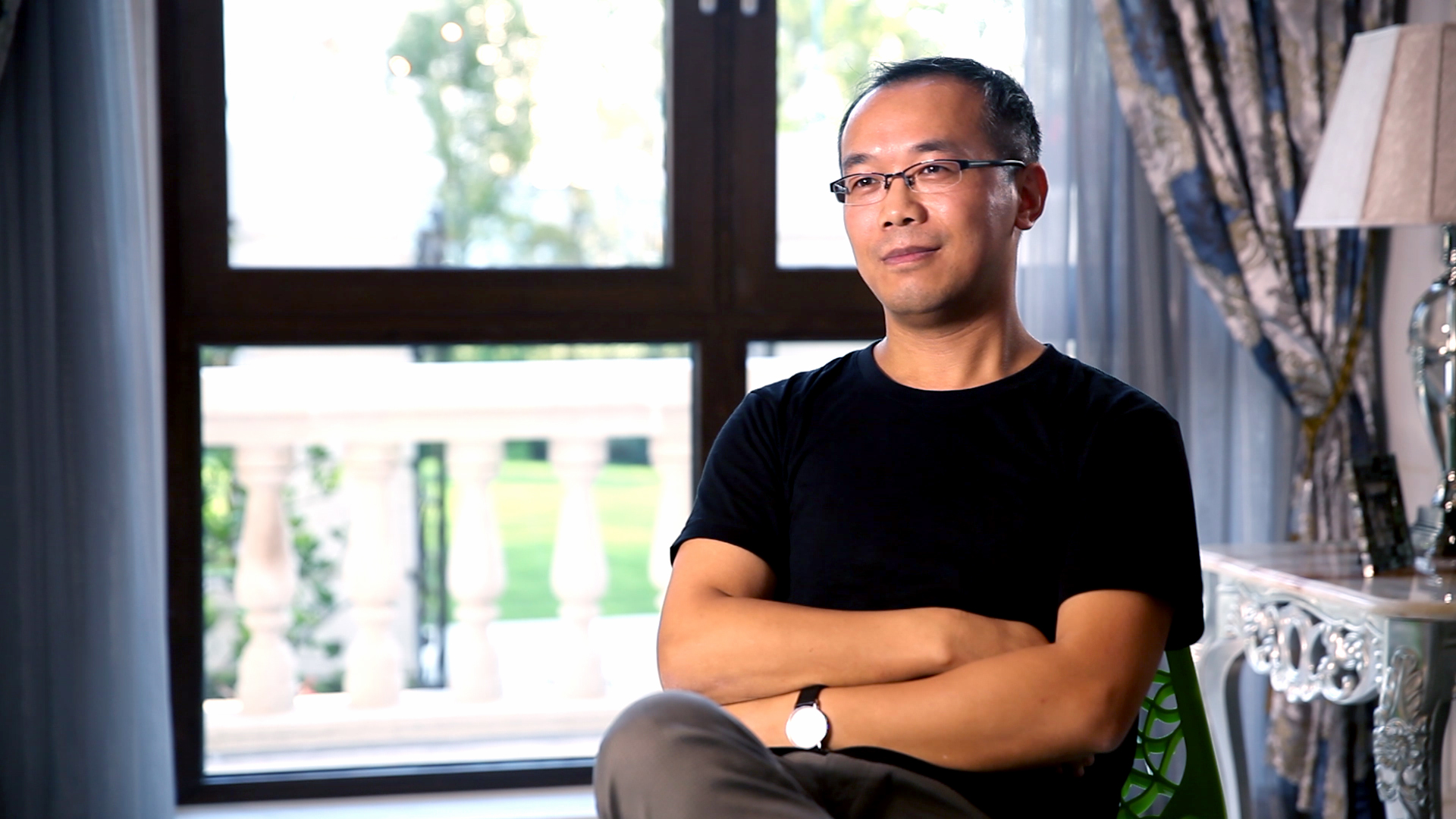
- Interview with Huang Jun, Design Director of Situ Image (Shanghai) Architectural Design and Consulting Co., Ltd., and German Architecture Master
While we enjoy the convenience brought by the development in the 21st century, an energy crisis is coming inevitably. In addition to two major energy consumption killers – transportation and industry, building energy consumption has jumped to the top, becoming the biggest black hole of energy consumption. In the summit forum “West Low Carbon Economy and Green Architectural Industry” in 2009, Gu Yunchang, Vice Chairman of China Real Estate Research Association, said, “The newly-built floor area each year in China takes up 50% of the total quantity in the world, but the building energy consumption accounts for 40% of the whole society’s gross energy consumption in China.” Though governments in various regions vigorously advocate energy-saving and green building, it would take time for the Chinese construction industry to walk towards the path of energy-saving and sustainable development due to different factors such as cost, design, relevant laws and regulations and suppliers’ supporting.
Actually, in the 1970s, western society put forward the concept of energy-saving building. “Energy-saving building is a complete and precise system instead of simply meaning of building houses. From project approval, planning, design, materials, construction, completion and using of a building, to maintenance after decades, and users’ behaviors, all these parts are closely linked and influencing.” commented Huang Jun, Design Director of Situ Image (Shanghai) Architectural Design and Consulting Co., Ltd., and German Architecture Master. Graduated from the College of Architecture and Urban Planning Tongji University, he once studied in the School of Architecture, University of Stuttgart, Germany that is famous for architectural technology. He has years of in-depth research and work experience in energy-saving building. “Good design, high-quality materials, excellent process, correct using behaviors and indispensable daily maintenance are five major factors for energy-saving buildings.”
Design is the first step of all architectures. First, regarding the design of the entire architectural form, only concise design can realize relatively small contact and radiating surfaces and achieve better energy-saving effect. In the meanwhile, the demand of lighting and ventilation must be designed according to different applications and functions. Since materials and technology supplement with each other, the government needs a complete set of perfect detection system to guarantee the quality of construction materials. Besides, builders need to possess relevant professional knowledge and skills so that they can use materials and finish building according to correct technology. More importantly, users’ behaviors are directly related with the durability and validity of energy-saving building. “In Europe, governments often issue instruction manuals to low-energy residents and guide them how to save energy. For example, as low-energy residences often use mechanical equipment to solve ventilation, suggest residents open windows for natural ventilation every day for fewer than three times and each time lasts no more than half an hour. Therefore, the energy-saving effect can be maximized. If it happens to a big gap between indoor and outdoor temperature, the energy consumption for natural ventilation would be high, so adopting the mechanical ventilation equipment with heat recovery unit is more energy efficient,” he supplemented.
If design, materials, process, users’ behaviors and daily maintenance are the fundamental hardware conditions for buildings to realize the maximum energy conservation, then “intelligent design” can bring more humanized and intelligent buildings, thus creating a high-quality, comfortable, safe, convenient, energy-saving and ecological using space. The so-called intelligence means integrating the advanced technologies of building, communication, computer networks and monitoring into the optimized entire, which is characterized by highly self-control equipment, scientific information management, high-quality and efficient services, flexible and convenient using, as well as safe and comfortable environment.
In terms of function, while maintaining traditional building functions, intelligent building has optimized users’ lifestyle and living condition, helped arrange time effectively and save energy, realized electric device control and lighting control, etc., and offered comprehensive information exchange function. Regarding to operation, it can create a convenient lifestyle, comfortable living environment, and economical and practical home control means to residents. When it comes to structure, intelligent building adopts advanced communication bus means. When its product components are installed, a control system can take shape without greatly transform on existing living condition within residences and complicated wiring or adding new equipment materials.
“For example, intelligent building can offer relevant lighting effects according to different space requirements. On the one hand, it allows energy to be utilized most effectively. On the other hand, it improves users’ living experience. For instance, the requirement varies from different space, an office requires 300 lumens, while a meeting room needs 500 lumens. When the luminance cannot reach the requirement, the intelligent system would automatically turn on the light according to indoor phototonus, or automatically shade sun according to external sun glare. Nowadays, with the increasingly intense global energy, I believe that the intelligent building will surely become the development trend in the Chinese and even the global architecture industry and urban planning in the future.” According to his introduction, there is still a huge gap between China and western developed countries in the philosophy or equipment condition of the intelligent development level of most buildings. However, China is expected to catch up with developed countries within years if it only improves the technological standard of design specifications, increases technological level of installation, strengthens government attachment and adopts mandatory rules in terms of supervision. In the overall context of global integration, the manufacturing and procurement of hardware equipment are no longer great barriers, and design and management standards are major restriction factors.
Double-skin facade, perfectly integrating intelligence with aesthetics
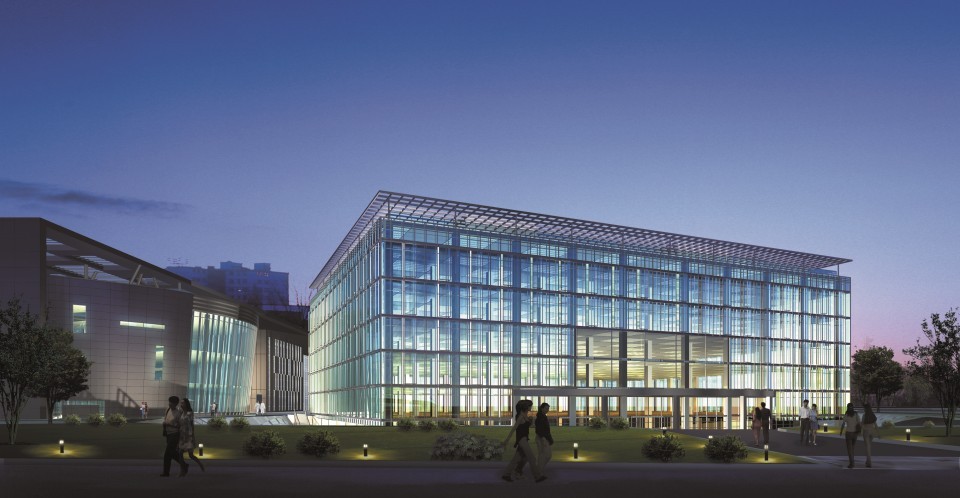
In recent years, China is vigorously developing green energy-saving buildings, thus bringing a number of architectural works with prospective technology. Huang Jun regards that Science & Education Center of Shanghai Tobacco (Group) Corporations is one of such works. Adopting the respiration double-skin facade system designed by Schüco, the building is not only resplendent and gorgeous, but also combines the climatic feature of hot summer and cold winter in Shanghai, adjusting measures to local conditions to the utmost.
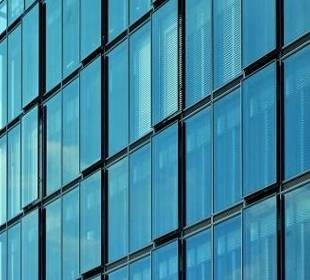
In order to realize the lighting effect, traditional office building often adopts glass with good permeability. However, the larger the glass is, the higher heat lose will be, which leads to high thermal radiation in summer and high thermal loss in winter. In order to avoid the condition, Schüco has designed the respiration styles of double-skin facade system for the building. The curtain wall system adopts Low-E glass, that is, low-energy glass or heat-protecting glass. “But it’s useless to adopt one layer of glass. Since glare is serious and the direct sunlight makes people feel uncomfortable, it’s necessary to add external sunshade.” Huang Jun said, “in the meanwhile, given that the wind pressure resistance of external sunshade shutter which can adjust direction is quite weak, typhoon in Shanghai turns out to be extremely fierce sometimes, and external sunshade shutter can be easily damaged, so we must add a layer of glass externally.” Therefore, the double layer structure including external glass, middle sunshade shutter, mechanical ventilation device and internal glass takes shape. This is the respiration styles of double-skin facade, one of the most representative energy-saving curtain wall systems in China up until now.
It is worth mentioning that there is a relatively closed 60cm interlayer in the middle of the facade used for air exchange. When the facade control system is launched, the external and internal layers of facade will open gradually, so outdoor air will enter the interlayer from the bottom of external wall, and leave the interlayer from the upper air outlet. Therefore, the space always stays at the airflow status, and heat flows in the space, thus gaining the name “respiration facade”. In this way, the facade can emit heat randomly in summer, and store heat at low temperature in winter to realize intelligent and reasonable energy utilization.
Window, Beyond Your Imagination
In the whole building, the window is frequently neglected, but closely related with users’ residential quality. Huang Jun expressed, “Window is far more than ventilation and appreciation. A well-designed window can effectively guarantee the temperature, humidity, air and light in doors, and become an indispensable constituent part in intelligent building.”
As a leading country in global precision technology and building trade, Germany possesses unique technology and advanced philosophy in the windows, doors and facade industry. Adhering to excellent German quality, Schüco utilizes the highest standard test for its doors and windows, including gas tightness, water tightness, wind pressure resistance experiment, etc., aiming to simulate life scenes with the strictest experimental environment and thus creating incomparable living enjoyment.
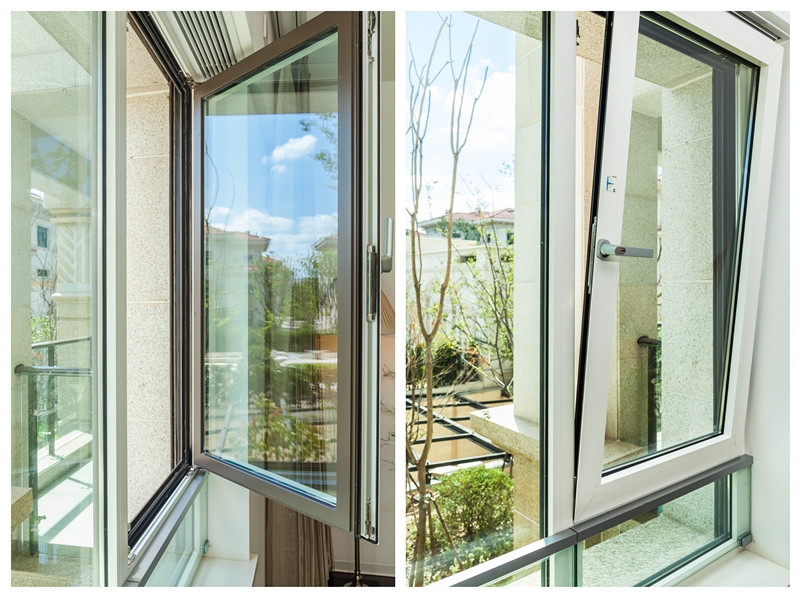
Though subtropical monsoon climate is prevalent in Shanghai, the protecting force of windows turns out to be extremely important if plum rain or typhoon lasts more than half a month. Therefore, Schüco uses high-pressure faucet in the window experimental part, and stimulates the 11-level typhoon to rush windows directly in order to guarantee that windows can successfully resist rainstorm or gale weather. In addition to strict test, the design and installation of windows and adopted materials are quite particular. In general situation, most designs of Schüco windows carry on the German tradition –inward-opening and tilt. “Such kind of design is quite rational and the safety coefficient is higher.” He said, “At first, if the window is installed with external sunshade, the opening mode of inward-opening and tilt won’t conflict with external sunshade. Besides, when the window opens in the inward tilt mode each time, the airflow enters the room gradually and it will not blow off things in the room. In high-rise buildings, such design can minimize the risk of wiping windows”. In addition, the design of Schüco windows is humanized. For example, safe lock can be installed to meet users’ diversified demand.
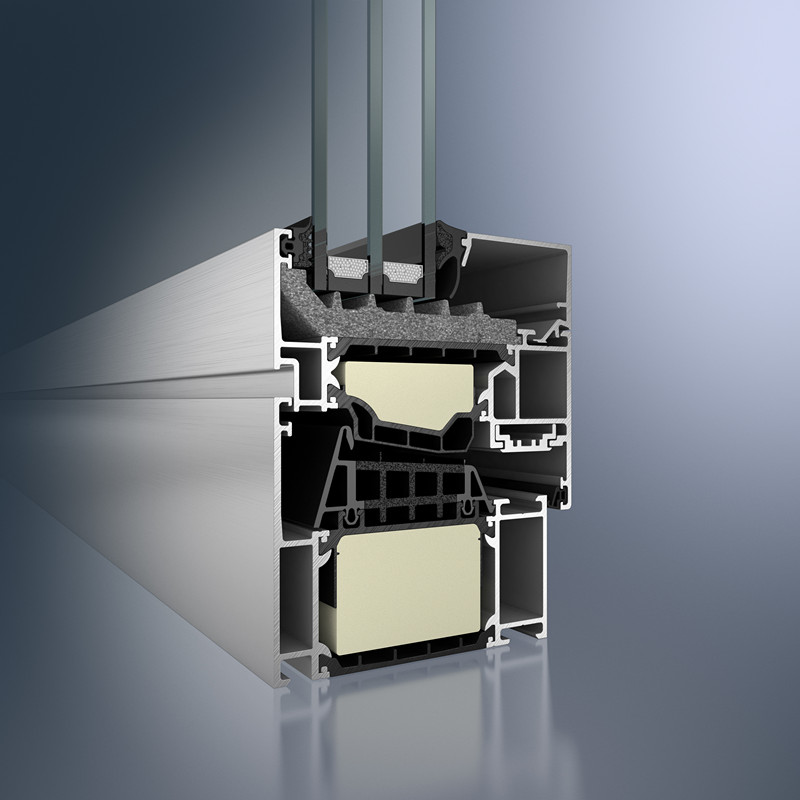
Aluminum windows are durable, solid, impact-resistant and strong. However, its fatal flow is the poor thermal insulation property. Therefore, Schüco intends to add high-strength nylon adhesive tape in the middle of aluminum alloy window materials, and divides materials into two, thus reducing heat exchange indoors and outdoors through window, so as to realize thermal insulation in summer and heat retaining in winter.
“Thoughts determine products and details determine success or failure.” In the eyes of Huang Jun, countless detailed problems have determined whether a building is successful or not. “From a window to intelligent control system, both small equipment and big component are the key factors for achieving green and energy-saving building.”